
The graveyard slot. Every event manager knows it. You’ve spent months planning an important conference, your keynote landed beautifully this morning, and now it’s 2pm, the room smells of food, and you can feel three hundred professionals starting to slide gently into their chairs.
The post-lunch dip is physiological, not personal. Human body temperature drops slightly after eating, alertness follows, and no amount of enthusiastic slide design will entirely fix that. But energy in a room is manageable, if you treat it as a design challenge rather than an act of hope.
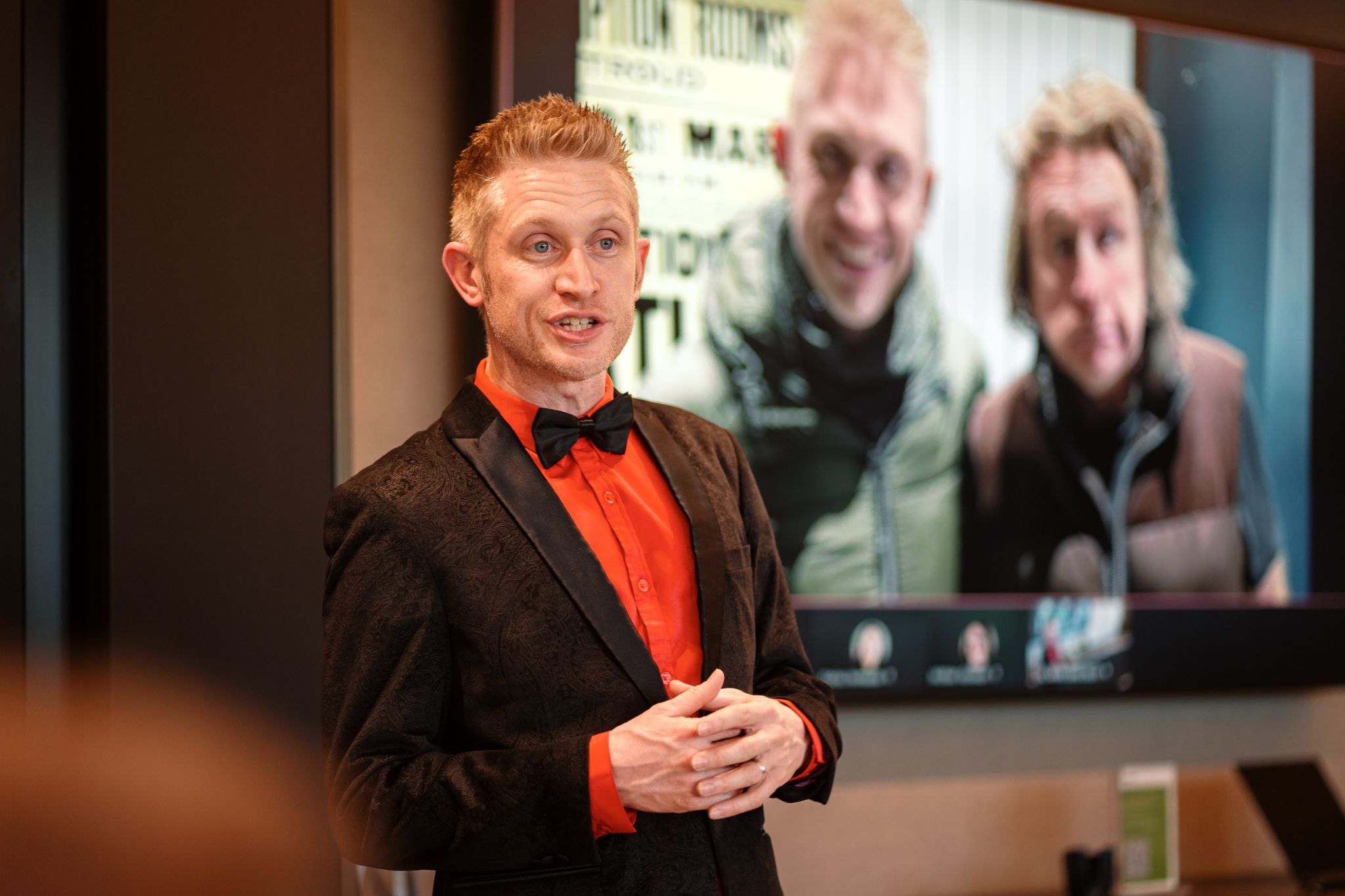
The first thing to understand is that energy doesn’t just happen to your audience. It’s something the event creates conditions for. That’s why the role of your host or MC in the hour after lunch is more important than almost any other moment in the day.
A skilled corporate host doesn’t just introduce the next speaker. They read the room, adjust according to the vibe, and actively reset the energy in the room. A well-placed piece of comedy, a quick piece of audience interaction, or even a short magic routine can shift the psychology of a room. Laughter, specifically, reduces cortisol and triggers a neurological state much closer to genuine alertness than any amount of coffee. (Though, a medium skinny latte brings much joy!)
Beyond entertainment, consider the structure of your afternoon programme. The sessions that demand the most cognitive effort, complex data, strategic presentations, anything requiring note-taking, should ideally land in the morning when focus is naturally sharper. The afternoon is better served by interactive formats, panel discussions, case studies, and anything that invites participation rather than passive listening.

The physical environment matters too. If you can open windows, change the lighting, have energetic music playing as people enter, or shift seating from theatre-style to something less uniform, do it. Small environmental cues signal to the brain that something has changed, and change is a form of stimulation.
But your most reliable tool against the afternoon slump is a host who understands their strategic role. Not someone filling time between sessions, but someone who manages the energy arc of your event. The difference between a room that stays alive all day and one that loses momentum after lunch is rarely the programme. It’s almost always the person at the front.
If you’re planning a full-day conference and want to talk through how the hosting structure can protect your afternoon energy, get in touch.