
You’ve got 30+ people in a room. Maybe more. Someone suggests an icebreaker and you watch half the team check their phones. Traditional team-building activities fall flat with large groups because the same activities are rolled out year on year, since 1982! But your team still needs connection, especially when remote workers finally meet in person or departments rarely interact.
Large group team-building isn’t about forcing false enjoyment. It’s about creating genuine moments where people actually engage with colleagues they wouldn’t normally talk to. When you get this right, the event becomes something people reference months later rather than something they tolerate for an afternoon.

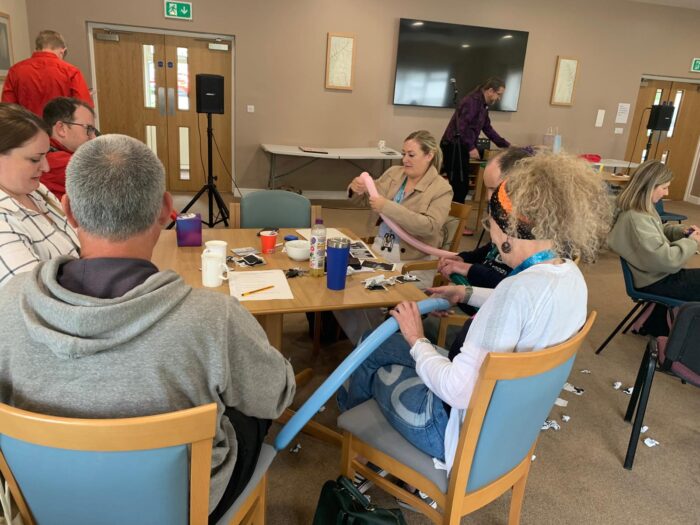
Why Traditional Icebreakers Fail
The problem with most team-building activities is they were designed for groups of 12, not 120. Asking people to share fun facts in a circle when there are 60 participants kills momentum before you start. Small group breakouts can work, but they fragment the experience and people miss the energy of the full room.
Large groups need activities that create shared experiences while still feeling personal. Team-building events that work at scale have a few things in common: they’re fast-paced, inclusive by default, and don’t require athletic ability or extrovert energy to participate. When someone can engage from their comfort zone while still being part of something bigger, you’ve nailed it.
The other issue is engagement span. With a large group, you have maybe 20 minutes before people mentally check out. Activities need to hook attention immediately and maintain energy without relying on everyone to be “on” the entire time.
What Makes Team Activities Actually Work
Speed matters. A lot. When activities move quickly, people don’t have time to overthink participation or feel self-conscious. Fast-paced team games create natural momentum that carries quieter team members along without singling anyone out.
Competition helps too, but only if it’s structured right. Small teams within the larger group work better than individuals competing. This way, the naturally competitive people get their fix, but those who hate being in the spotlight can contribute without pressure. The best formats let people self-select their level of involvement while still feeling part of the action.
Interactive elements that don’t require physical movement are essential for mixed ability groups. Not everyone can or wants to run around. Inclusive team-building means someone can fully participate whether they’re sitting or standing, introverted or extroverted, new to the company or been there 20 years.
Gameshow-Style Events for Large Teams
Gameshow formats scale brilliantly because they’re built for audiences. Everyone can see what’s happening. The energy is visible. Small teams compete, but the whole room experiences it together. This creates shared references and inside jokes that outlast the event itself.
The format also allows for variety. Quick-fire rounds keep energy high. Team challenges create collaboration. Individual spotlight moments (always voluntary) add unpredictability. When you structure corporate entertainment for team bonding like a gameshow, you get multiple engagement points rather than one long activity that either works or doesn’t.
Music, lights, and production value matter more than people expect. A well-produced gameshow feels like a proper event, not just “something HR organised.” This shifts how people show up. They’re more willing to engage when the experience feels crafted rather than thrown together.

FAQ
How long should team-building events run for large groups?
I believe that 90 minutes is the sweet spot. Long enough to create genuine connection, short enough that people don’t mentally check out. Half-day events work if you break them into distinct segments with different energy levels.
What if some team members refuse to participate?
Design activities where watching is still participating. Gameshow formats let people support their team from the sidelines without being forced into the spotlight. Genuine fun is contagious, so reluctant participants often get pulled in naturally when they see others enjoying themselves.
How do we avoid the same old boring activities?
Stop defaulting to trust falls and egg drops. Look for energetic icebreaker ideas that feel more like entertainment than corporate training. If your team-building event could also work as evening entertainment, you’re on the right track.
Creating Connection at Scale
Large group team-building works when you stop treating it like a scaled-up small group activity. The best experiences create energy, competition, and collaboration simultaneously while giving people permission to engage at their comfort level. When people leave talking about moments from the event rather than complaining about awkward icebreakers, you’ve succeeded.
—
👋 Hi, I’m Tom, a Corporate Event Host & Comedy Magician. I’m also the founder of ‘The Office Magician’ – A fast-paced team-building event with a magical twist. Or if you want to move fast, call me on 07716997153
Or if you want to move fast, call me on 07716997153.